
The Highest-Margin Add-On Most Phone Repair Shops Ignore

Most repair shop owners will tell you the money is at the bench: screen repairs, battery swaps, the occasional water-damage rescue. They're not wrong about where the volume is. A screen repair brings in $80 to $150, and it's usually what gets someone through the door in the first place.
The trouble is that the repair is often the least profitable thing you'll sell that customer all day. Once you cover the part, the labor, and the warranty risk you're carrying if it comes back, the margin is thinner than it feels. The money that decides whether you had a good month tends to hide in what you sell next to the repair, and the most profitable phone repair shop add-on of the bunch is one a lot of shops still treat as an afterthought: the screen protector.
The numbers are lopsided in a way that's easy to miss. A tempered-glass or film protector costs you about a dollar. You sell it for $15 to $25, more with installation, which is a margin north of 1,000%. Nothing else on your shelves performs like that, repairs included. Accessories like these usually make up 20% to 40% of a repair shop's gross profit, so it's a real chunk of your take-home for a category most owners barely think about. Add one to a repair, ideally with a case, and you've put another $40 to $60 on a ticket for a customer who already trusts you and already has their wallet out.
Why it gets left on the table
The reason usually has nothing to do with selling and everything to do with how protectors get bought. The old approach means stocking them pre-cut, one model at a time, in bulk. Buy a box for a phone that never caught on in your area and it becomes cash sitting frozen on a shelf. Miss a model and you're stuck telling a paying customer you don't carry their phone, which is how a sure sale walks out the door and usually doesn't come back. And when a new iPhone or Galaxy lands, you're waiting on a shipment of fresh protectors while customers are already asking. Every one of those is money you should have made.
Cutting protection on demand
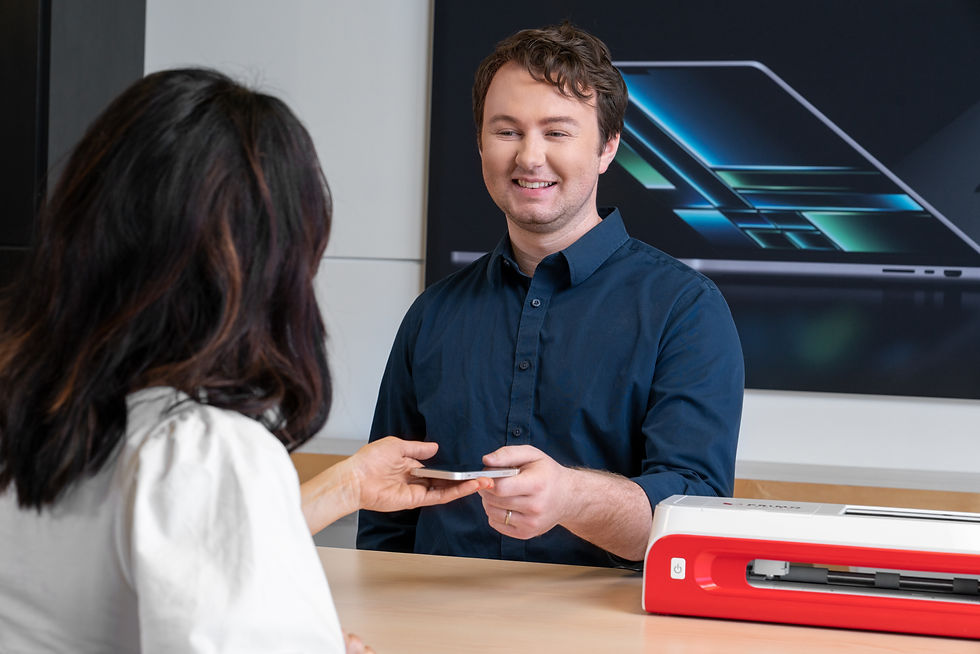
Shops that own this category stopped stocking protectors that way. They cut them on demand instead, one exact fit at a time, for whatever phone is sitting on the counter. An on-demand screen protector cutting machine keeps rolls of film and glass on hand and cuts to fit any of 2,000+ devices on the spot. No boxes, no dead stock, and nothing to wait on when the next flagship drops. You can protect a brand-new phone the same week it releases, while the shop down the street is still checking tracking numbers. Buying direct instead of stocking up is what keeps the margins high and the risk off your books.
Getting the attach rate up
The capability only pays if it becomes routine. A few habits separate the shops with high attach rates from the ones leaving the money behind.
Make the protector part of finishing the job rather than a pitch at the end. "I'm putting a fresh protector on before you go, glass or matte?" gets a yes far more often than asking whether they want one at all. Tie it to the repair they just paid for, since a bare screen is a screen that cracks again, and framing protection as insurance on that repair is an honest and easy sell. Cutting the protector to their exact phone while they watch does some of the work for you, because a custom fit feels worth paying for. And price it with some confidence. Your customer isn't comparing you to a marketplace three-pack, they're paying for the right fit, installed clean, today.
The part that compounds
When your protection supplies come in as low-cost consumables measured in dollars instead of boxes, almost every protector you sell is margin. That's what a Primo Direct membership is built around: a low monthly plan that keeps your machine unlocked and your film and glass cheap, so the highest-margin add-on in the shop stays that way. Repairs will always be why customers find you. The protector might be why the numbers finally grow.


Comments